Operational Intelligence
The “Invisible” Leak in Your Pit-to-Port Chain—and How to Plug It
A look at the disconnected decisions and hidden operational losses that emerge when pit-to-port data is fragmented across systems.
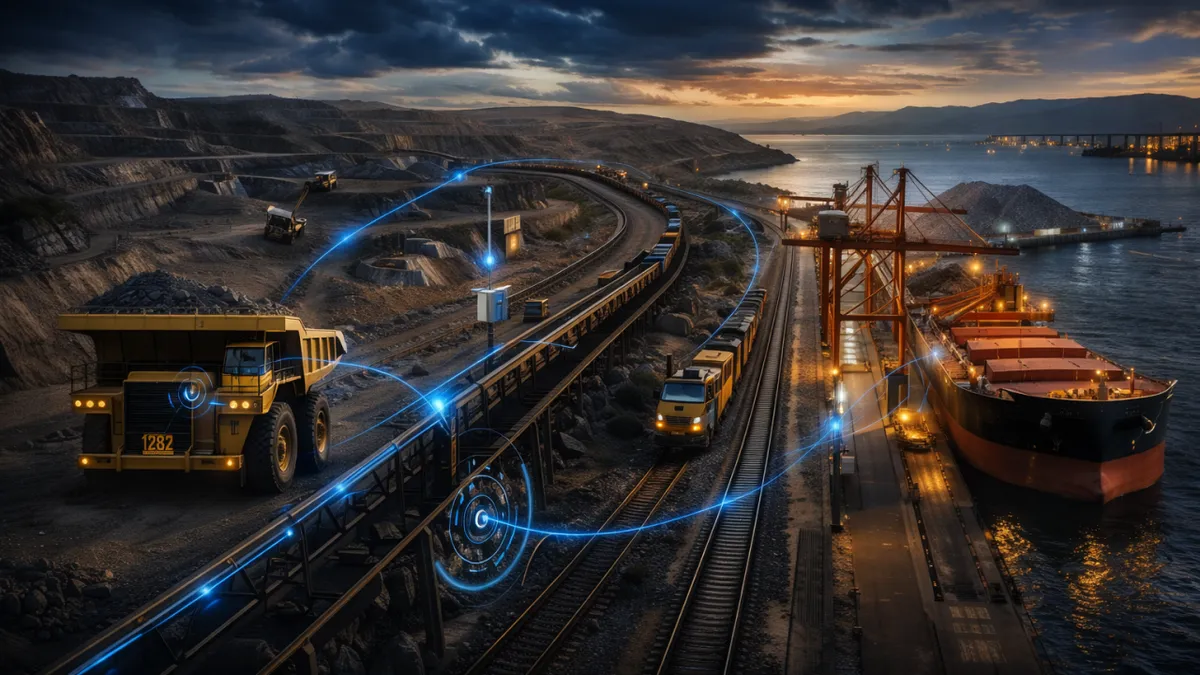
Pit-to-port performance is often measured through tonnes moved, rail capacity, stockpile levels, and vessel turnaround. Those measures matter, but they can hide a more persistent source of loss: the delay between an operational event and the decision it triggers.
When data arrives late or remains trapped in separate systems, a small disruption in the pit can grow as it moves through haulage, processing, rail, stockpiles, and loading. By the time the problem appears in a report, the opportunity to contain it may already be gone.
The intelligence gap
Operations do not lose value only when equipment stops. They also lose value while teams wait for information, reconcile conflicting reports, or make decisions using an incomplete picture. Delayed data turns avoidable variation into lost throughput, unplanned maintenance, and commercial penalties.
Edge intelligence reduces that delay by processing important signals close to the equipment and people producing them. Instead of waiting for every event to travel to a distant platform, the operation can detect exceptions and respond where the work is happening.
In the pit: move from tracking to optimisation
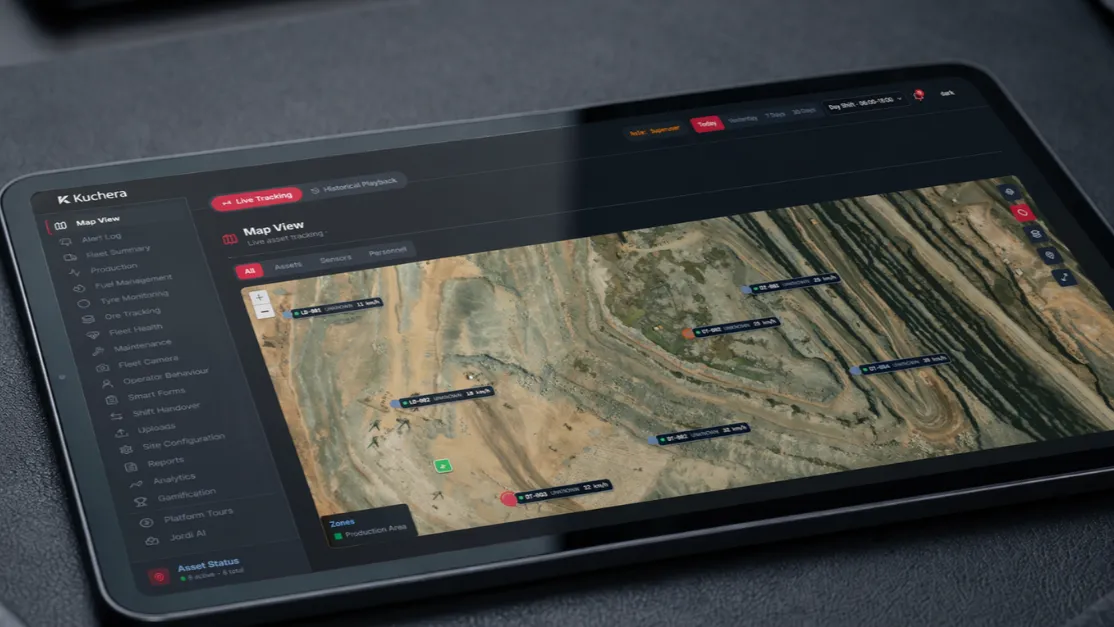
Knowing a truck’s location is useful. Understanding why its cycle time is drifting is more valuable. Connected fleet data can identify queueing, route deviations, idle time, and repeat delays while supervisors still have time to intervene.
The same principle strengthens safety. Localised collision-avoidance technology can assess hazards quickly and issue alerts without relying entirely on a remote network connection.
Across the middle mile: detect failure earlier
Conveyors and rail corridors often connect every upstream production decision to every downstream commitment. A bearing temperature increase, belt defect, or loading delay can therefore affect the entire value chain.
Continuous monitoring allows teams to detect emerging conditions early, plan an intervention, and prevent a manageable fault from becoming a prolonged interruption.
At the port: connect quality, timing, and commitments
At the final stage, operational data meets customer expectations. Bringing pit, processing, stockpile, and loading information together helps teams manage grade, timing, and vessel plans with fewer surprises.
A shared operational view also gives logistics and production leaders the same version of events, reducing the coordination gaps that create rework and delay.
Built for rugged, connected operations
African mining environments often combine remote locations, uneven connectivity, and demanding physical conditions. A practical architecture must continue to deliver useful intelligence under those constraints and integrate with the hardware already deployed on site.
- Process critical signals close to their source
- Connect people, equipment, and production data
- Surface exceptions early enough for teams to act
- Create one operational picture from pit through to port
The important question is not whether a mine has data. It is how quickly that data becomes a coordinated decision. Closing the intelligence gap turns pit-to-port from a chain of separate activities into one visible, responsive operating system.
Adapted from material published by LinkedIn.
View original source